ALL NEW

DEEP DEADRISE HULLS – OFFSHORE TILLER HULL COMPARISON

OUR NEW “DEEP V” AND “MEDIUM V” OFFSHORE TILLERS

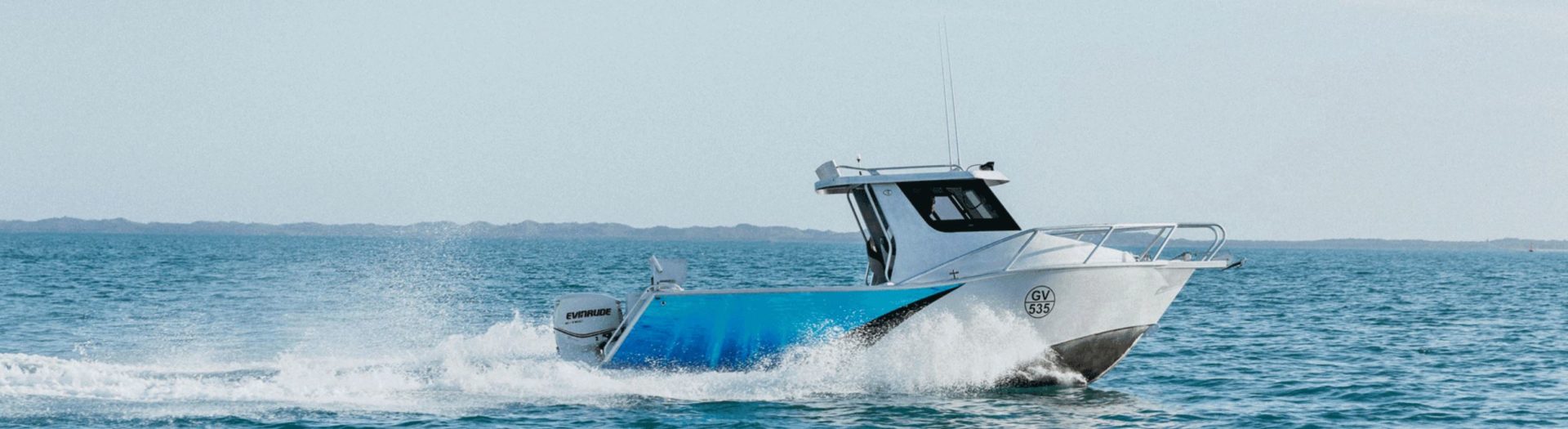
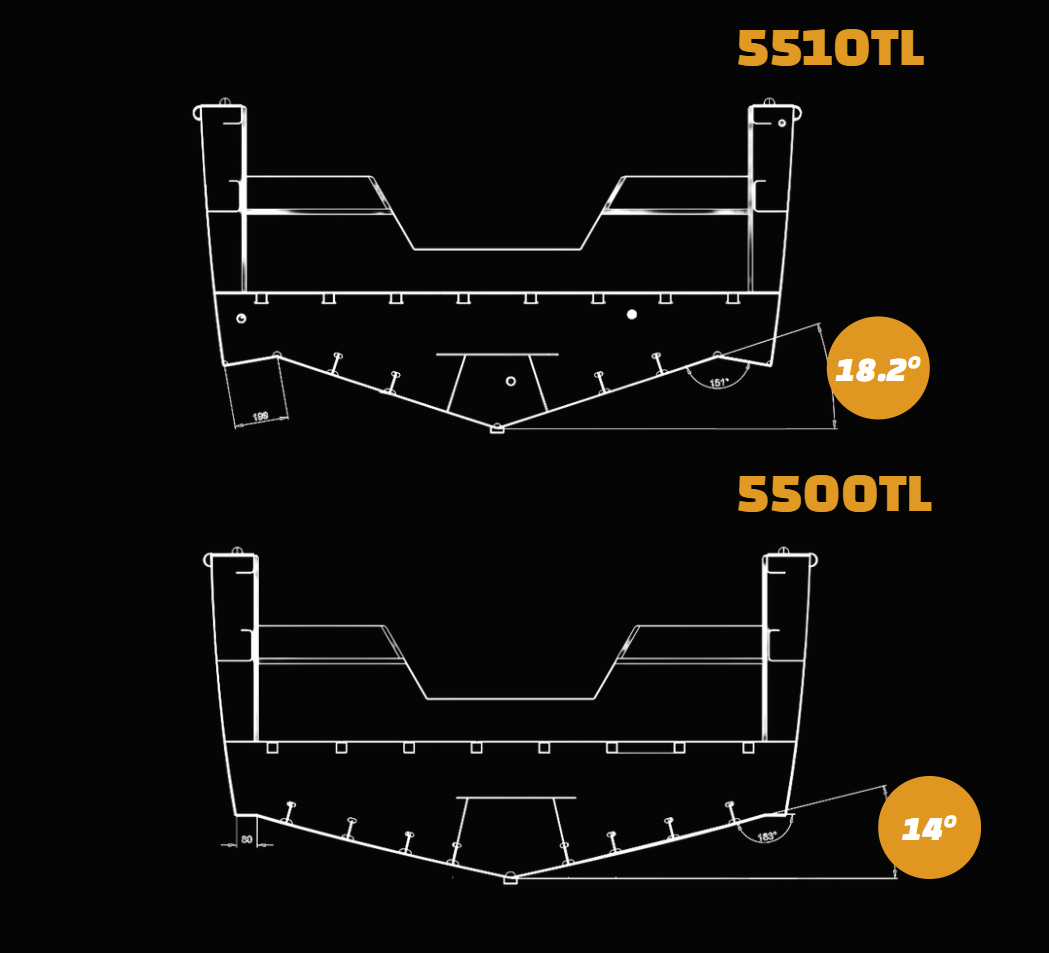
While a lot of our standard range of hulls have been relatively shallow in deadrise compared to some competitors at the transom with deadrises around 14 degrees and a relatively small flat chine at about 80mm. We know everyone loves choice. So we have developed an Offshore Tiller range of standard and deep deadrise hulls. Peter, our lead Naval Architect takes you through the differences between our tried and tested hulls when compared to our new deep deadrise options. When deciding between these hulls ask yourself, “do you want to travel through the chop or jump over it?”. For driving through the chop, we feel our standard design is a great balance of performance, stability, and soft ride. If you want to be jumping over waves in big seas, the deeper deadrise comes into its own.
xx00TL – Medium V
Firstly we have our tried and tested 00TL’s a hull with characteristics similar to our much-loved centre console range. We have a medium V (roughly 14 degrees) at the transom with roughly 80mm chines. As the hull progresses forward, we start with a slow increase in v and get very sharp towards the bow. This hull punches through swell, provides a smooth ride, but focuses more on efficiency and stability. You don’t need a massive engine pumping loads of fuel to get you places at high speeds and you have stability at rest to ensure you have a great fishing platform.
xx10TL – Deep V
We’ve completed loads of deeper deadrise designs over the years and so we know that there can be compromises. When creating our own range we drew on this knowledge. We wanted to achieve a deep V without compromising on stability, we wanted our designs to make light work of any chop you might face yet still be a great fishing platform. So our new deep v designs start at the transom with a roughly 19 degree deadrise before progressively sharpening toward the bow, reaching angles upwards of 40 degrees. We then increase the chine size and reverse angle to make sure they remain in the water while at rest. This hull will need a bit more grunt to get it out of the hole but once you are up and going you will have no troubles punching through some heavier chop and swell.
We are constantly designing and releasing new models. Join our “Early Releases group” to be the first to see the new designs and a bunch of incentives that come with it. For this release, we are offering the first 8 offshore tiller kits with a $500 discount.

READ MORE ARTICLES

BUILD WIKI

Colby’s Journey into Boat Building

Colby’s Journey into Boat Building

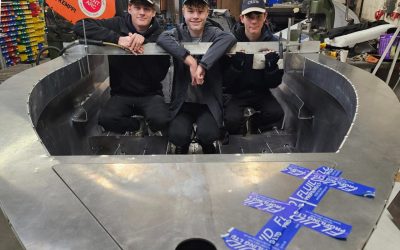
Colby has been building a modified 6510WA and its trailer kit, this is his journey into boat building. It all started when he was 17, dreaming of a boat he could truly call his own. At the time, buying a prebuilt boat or even a decent second-hand one was out of reach. His first attempt was a 16-foot fibreglass boat rebuild, but it didn’t last long, and the dream was put on hold. In the meantime, he bought a 4.5m tinny, but it quickly proved too small for his ambitions. That’s when the idea hit: why not build an aluminium boat from scratch?

read more
Inside CNC Marine: Courses, Concepts & What’s Next

Inside CNC Marine: Courses, Concepts & What’s Next

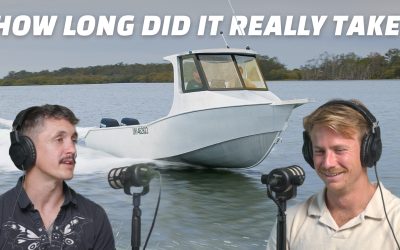
In this episode of the CNC Marine Podcast, the team catches up on what’s been happening behind the scenes, from recent Pure Plate boat-building courses and international builders, to current design projects, new concepts, and boats in the shed. A relaxed, light-hearted chat covering where CNC Marine’s been and what’s coming next.

read more
Marine Buoyancy Foam Guide

Marine Buoyancy Foam Guide

Not all buoyancy foam is created equal. In this guide, we break down why CNC Marine recommends closed-cell foam over EPE, how buoyancy requirements work under AS 1799, and what “basic” vs “level” flotation actually means for your build. If you’re putting a kit into survey or just want extra peace of mind, this is the article to read before you buy foam.

read more